
Introduction
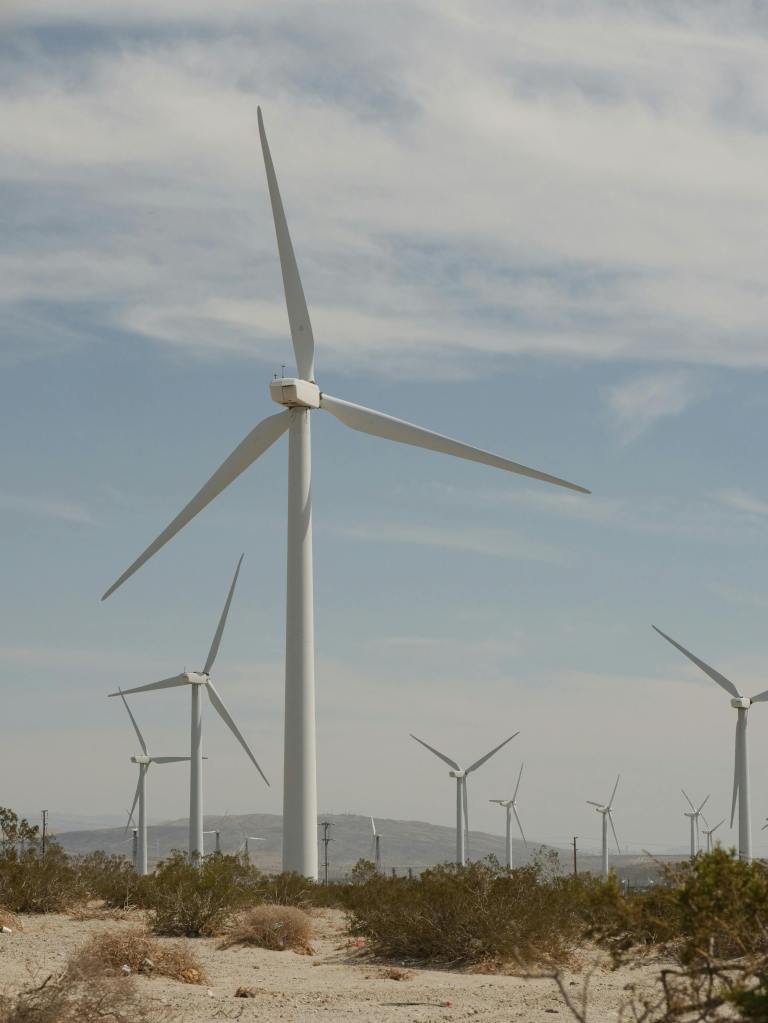
In the first three months of 2025 the world consumed over 126 million terajoules of energy. Although 80% of this energy currently comes from fossil fuels, some countries generate a significant portion from wind – a much cheaper and clean energy source. In the UK, for example, wind energy now accounts for 30% of the total, and this percentage has grown fivefold over the past 14 years. Offshore wind energy is particularly noteworthy, having shifted from a minor contributor to now accounting for about 50% of the UK’s total wind energy production. It is one of the most promising renewable energy systems worldwide, especially due to its rapid expansion. In stark contrast, today’s massive projects like Hornsea 2 – the world’s largest offshore wind farm, located in the UK – have turbines capable of generating 8 MW each, surpassing the entire output of the first offshore installation, built in Denmark 35 years ago.
This growth is truly exponential. With upcoming projects like Dogger Bank, we are on the brink of doubling Hornsea 2’s cumulative capacity. While this progress is incredibly promising, it also brings new challenges that must be addressed. One of the most urgent is lowering the Levelized Cost of Energy (LCOE) to make wind energy more affordable and accessible. However, a significant obstacle remains: the relatively short lifespan of wind turbines -typically around 20-25 years- which drives up costs and limits the efficiency of this energy system. So, how can we extend the life cycle of these vital structures? Fracture mechanics methodologies, developed over the past two decades, offer a promising solution. These advanced techniques can significantly improve the estimation of the fatigue life of wind turbines, potentially extending their operational lifespan and maximizing their efficiency. In this post, we will explore into some of these groundbreaking techniques and how they can transform life cycle predictions for wind turbine structures, ultimately helping us unlock the full potential of offshore wind energy.
Understanding fatigue life of wind turbines
Wind turbine structures must endure a highly complex load profile throughout their operational life. These structures are constantly subjected to various forces, including the wind (and ocean currents for offshore turbines), as well as numerous other meteorological phenomena. Additionally, they must bear the weight of the rotor, handle the gyroscopic loads as the turbine adjusts its orientation to always face the wind, and endure centripetal forces as the blades rotate at high speeds. But it doesn’t stop there. Many of these forces are random, making them difficult to predict. We cannot know exactly when they will occur or the exact magnitude they will reach. Instead, we rely on statistical calculations to predict these load events. Over the lifespan of a wind turbine, the structure can experience around one million cycles.
Currently, the methodologies used to predict the fatigue life of wind turbine structures are relatively simplistic when compared to the complexity of the load profiles they aim to model. Typically, small-scale specimens are tested for fatigue, using the same material that will be used in the real structure. The number of cycles to failure is measured at various load levels, resulting in the creation of an S-N curve, which correlates load intensity to the number of cycles before failure. The next step involves applying the Palmgren-Miner Rule, which quantifies the damage suffered by a structure based on the number of load cycles at specific intensities and compares this with the failure points established by the S-N curve.
However, this traditional approach is not without its limitations. It overlooks several critical factors that significantly affect fatigue life. For instance, the impact of welds—an essential component in wind turbine structures—can’t be ignored. Wind turbines are generally manufactured in separate sections that must be welded together, and both circumferential and longitudinal welds are common in turbine towers. These welds play a crucial role in the overall structural integrity, and the current methods don’t fully account for their impact on fatigue. Another significant factor is surface roughness, which is known to exacerbate fatigue effects. This is particularly problematic in offshore turbines, where surface roughness is often unavoidable. To protect these turbines from corrosion, a protective coating is applied. While this prevents corrosion, it also leads to the formation of pits in the structure, which can evolve into cracks over time. Currently, these effects are addressed by applying an empirical knock-down factor of approximately 3 to the S-N curve, reducing the predicted fatigue life to account for factors like welding and surface roughness. While this method provides a conservative estimate, it’s far from perfect.
An Initial Step Towards the Application of Fracture Mechanics to Predict the Fatigue Life of Wind Turbines
Over the past 25 years, two significant fracture mechanics methodologies have emerged, each demonstrating remarkable capabilities across a variety of applications. These techniques have been successfully tested in fields such as ceramics for aircraft engine blades, hydrogen embrittlement in pipelines, and biomechanics. By incorporating both material properties and external boundary conditions, these methodologies can accurately predict when and where cracks will initiate and propagate.
The first methodology, the Coupled Criterion, is based on two essential conditions that, when met simultaneously, are sufficient to predict crack nucleation. These conditions are an energy condition, derived from an energy balance, and a stress condition. One of the key advantages of the Coupled Criterion is its low computational cost. However, its main limitation is the need to assume a crack path in advance, which restricts its applicability when multiple potential crack paths must be considered.
The second methodology, the Phase Field Model for Brittle Fracture, offers a different approach. In this model, a sharp crack is replaced by a smooth transition zone where a variable, known as the phase field variable, gradually evolves from 0 (no damage) to 1 (complete damage). To extend this model to account for fatigue, a degradation function is added, which captures the reduction in fracture toughness over repeated loading cycles. This Phase Field Model has been successfully applied to predict the effect of surface roughness on the fatigue life of metals, particularly in the high-cycle fatigue regime, providing a novel computational framework that intends to reduce the costly experimental campaigns that are required to measure the fatigue life of rough specimens.
To sum up…
By integrating more advanced fracture mechanics methodologies, we can refine our understanding of these factors and, potentially, increase the fatigue life of wind turbine structures. This could mean extending the life of certain components from 25 years to 50 years, ultimately improving the long-term sustainability and efficiency of wind energy production.
 energyfutureslab.blog
beauteous! Reports Detail [Cultural Trends] in [Region] 2025 pleasing
LikeLike